







Search Results for: extraction concentration

How is the extraction yield of immersion brewing calculated? Concentration measurement and practical demonstration under the Golden Cup theory
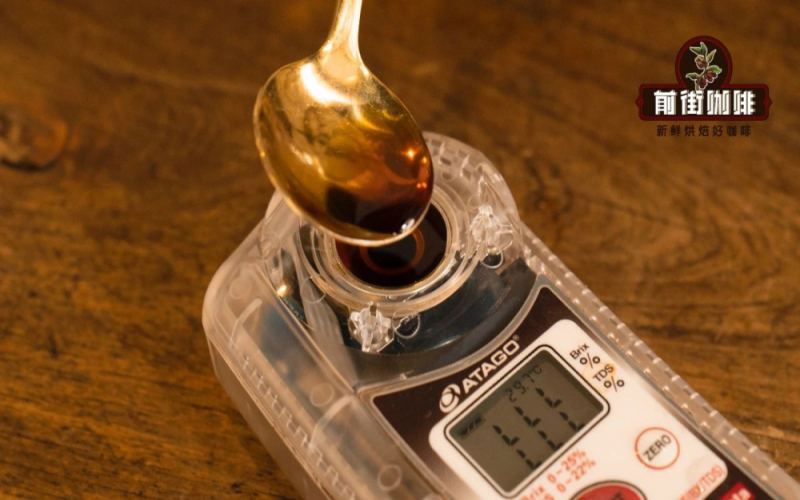
In the Golden Cup extraction theory, extraction yield and concentration are the two core metrics for assessing the flavor state of coffee. However, coffee that falls within the ideal range is not necessarily delicious, and coffee outside the range is not necessarily undrinkable—the key lies in how to use these two values to help adjust the brewing plan. From the perspective of Front Street, this article first clarifies the basic definitions and ideal ranges of extraction yield and concentration, then explains in detail how to use two sets of concentration measuring tools, and finally uses the Santa Vini anaerobic natural beans as an example to fully demonstrate the entire process from weighing the liquid weight to plugging it into the formula to calculate the extraction yield. [more…]

What exactly is high-concentration, low-extraction? Master this approach to brew coffee without bitterness.
Many coffee enthusiasts encounter the term "high concentration, low extraction" when reading Front Street Coffee articles or others' brewing分享, but the explanations they find are often packed with confusing data. This article breaks down this complex theory into plain, easy-to-understand descriptions: first, it explains that high concentration, low extraction is not a fixed technique but a brewing concept and outcome; then, with the help of the Golden Cup extraction chart, it clarifies the two core concepts of "concentration" and "extraction yield"; finally, it explains why, when dealing with dark-roasted, anaerobically processed, or extraction-sensitive beans, one needs to lower the extraction yield while increasing concentration, and how this concept is specifically reflected in Japanese-style brewing. [more…]

Pour Over Coffee Flavor | What Does High Concentration, Low Extraction Mean in Pour Over Coffee? Which Coffee Beans Are Suitable for High-Concentration, Low-Extraction Brewing?
Here it comes, here it comes. Today Front Street is going to share with you a brewing approach—high concentration, low extraction. This brewing method can minimize the bitterness of the coffee to the greatest extent, bringing the coffee to a nice flavor performance. What is high concentration, low extraction? Front Street will give a brief introduction here; it all still has to start from this "Golden Cup extraction [more…]
Analysis of the SCA Golden Cup Extraction Standard: The Calculation Logic and Practical Demonstration of Pour-Over Coffee Concentration and Extraction Yield
The Golden Cup extraction system is a quality reference framework widely recognized in the global coffee industry, and its core lies in controlling the concentration and extraction yield of the coffee liquid within a specific range. Compiled by FrontStreet Coffee, this article systematically reviews the origins of the Golden Cup standard and the differences in national standards, explains in detail the formulas for extraction yield and concentration, and uses a VST refractometer and a brewing example with Ethiopia Huakui 4.0 to demonstrate how to measure concentration and calculate extraction yield. At the same time, the article also discusses the influence of the pour-over coffee grounds-to-water ratio on flavor, gives a recommended ratio of 1:15 suitable for most bean varieties, and helps coffee enthusiasts build a quantifiable approach to brewing adjustments. [more…]

How Are the Gold Cup Extraction Yield and Strength Calculated for Pour-Over Coffee? Recommended Coffee-to-Water Ratios and an Analysis of the Evolution of SCA Standards
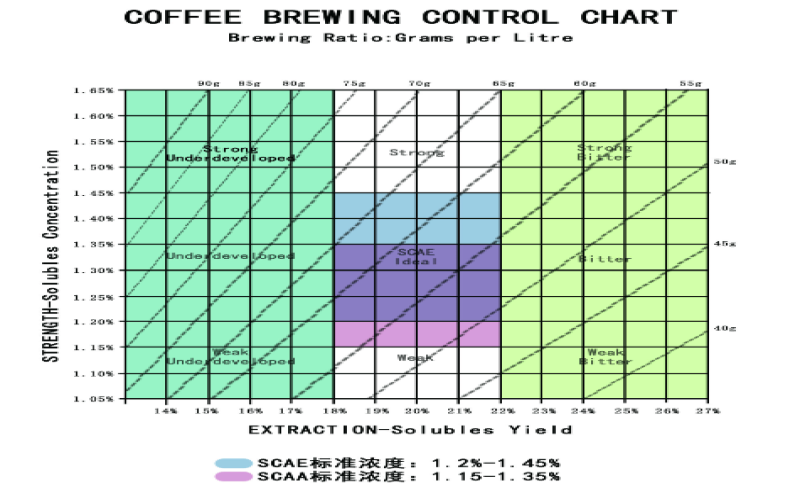
Many coffee enthusiasts have heard of the Golden Cup extraction theory: ideal concentration 1.15%-1.35%, ideal extraction yield 18%-22%. But this standard actually comes from the SCAA, not the SCA; the European and American coffee associations each have their own positions on ideal concentration. After the SCAA and SCAE merged in 2017, the UC Davis Coffee Center made slight adjustments to the old brewing control chart, loosening the upper concentration limit and the brew ratio range. This article will start with the history of the Golden Cup theory, sort out the differences between the old and new control charts, explain why high concentration with low extraction can highlight acidity while low concentration with high extraction can bring out floral and chocolate notes, and, combined with product information from Front Street Coffee, help you understand how concentration and extraction yield should be judged together, rather than fixating on a single number. [more…]
Gold Cup Extraction Standard Explained: Concentration and Extraction Yield Calculation Methods and SCAA Standard Ranges
In coffee brewing, how to balance flavor and avoid under-extraction or over-extraction is a concern for every coffee enthusiast. The Golden Cup standard provides a widely recognized reference framework, covering the ideal ranges for extraction yield and concentration. This article will systematically review the origins of the Golden Cup standard and the specific values set by coffee associations in various countries, explain in detail the formulas for calculating concentration and extraction yield, and, using the example of Front Street Coffee's Ethiopia Florque 4.0 pour-over, demonstrate how to measure and calculate extraction yield with an ExtractMoJo refractometer, helping you find the flavor balance point that suits you in your daily brewing. [more…]
How can pour-over coffee highlight sweetness? A detailed explanation of the high-strength, low-extraction approach and practical parameter settings.
For many people, the most important thing about drinking coffee is that sweetness, but bitterness always easily barges in and ruins the party. In fact, coffee flavors are released in a sequence—sweetness and acidity come first, bitterness and off-flavors later. As long as you stop before bitterness dissolves out in large amounts, you can get a cup dominated by sweetness. This is the "high concentration, low extraction" approach we're discussing today: push the concentration higher while keeping the extraction yield at a suitably low level, so sweetness stands out and bitterness is suppressed. Below, we'll start with the Golden Cup extraction standard, explain what high concentration, low extraction is, its origins in Japanese dark roast brewing, and provide a directly usable pour-over recipe for light roasts. [more…]
High-Concentration Low-Extraction Brewing Method Explained: Strategies for Increasing Pour-Over Coffee Concentration and Water Dilution Adjustment Techniques
In the world of pour-over coffee, "high concentration, low extraction" is gradually becoming a highly regarded brewing approach. What it pursues is giving the coffee liquid a higher concentration while keeping the extraction yield at a lower level, thereby leaving ample room for subsequent adjustments. The core of this method lies in flexibly using the coffee-to-water ratio, actively or passively changing the extraction conditions. Unlike the traditional "high extraction" approach, high concentration, low extraction places more emphasis on the coffee's margin for error—even if the concentration is on the high side, it can be easily corrected by diluting with Bypass water, avoiding a cup that is hard to drink. This article will thoroughly analyze the operational details of this brewing concept and, combined with Front Street Coffee's practical experience, help you master the complete framework of high concentration, low extraction, and make a stable and delicious pour-over. [more…]
Analyzing the Relationship Between Extraction Yield and Strength in Pour-Over Coffee: From the Golden Cup Theory to Brewing Parameter Adjustment Plans
The extraction yield and concentration of pour-over coffee are core concepts that every enthusiast cannot avoid. Extraction yield describes the proportion of soluble substances in coffee beans that are carried out by water, while concentration reflects the percentage of dissolved substances in the coffee liquid. The two are mathematically related through the weight of the coffee liquid and the weight of the coffee grounds, and the extraction yield can be calculated using a refractometer. Understanding the interaction between these two indicators can help us predict flavor trends during brewing and quickly pinpoint the root cause of problems when tasting undesirable flavors such as burnt bitterness, sharp acidity, wateriness, or hollowness. This article starts from Front Street's staged brewing experiments to sort out the logic of changes in extraction yield and concentration, and combines parameters such as coffee-to-water ratio, grind size, and water temperature to provide specific adjustment ideas for under-extraction and over-extraction. [more…]
Pour-Over Coffee High Concentration Low Extraction Approach Explained: How the Coffee-to-Water Ratio Affects Drip Coffee Flavor
In the world of pour-over coffee, the balance between extraction yield and concentration has always been a focal point for enthusiasts. This time, Front Street Coffee brings a brewing approach called "high concentration, low extraction," aimed at suppressing bitterness as much as possible while allowing the coffee to present a satisfying layering of flavors. So, what exactly is high concentration, low extraction? How is it related to the Golden Cup extraction range? And how should the coffee-to-water ratio be adjusted to achieve it? Starting from Front Street's hands-on experience and combining it with a brewing case of Golden Mandheling, this article will break down in detail the principles, key operational points, and applicable scenarios of this method, helping you find an extraction direction in your daily pour-over that better suits your own taste. [more…]

A Complete Guide to the Golden Cup Extraction Theory: From Its Historical Origins to the Practical Application of Concentration and Extraction Yield
The Golden Cup extraction is a concept often mentioned in coffee circles. It uses two indicators—concentration and extraction yield—to judge whether a cup of coffee has been properly extracted. This theory can be traced back to 1952, when it was developed through collaborative research by the American coffee association and Dr. Lockhart of MIT. After multiple revisions, the Golden Cup range currently recognized by the SCAA is: extraction yield 18%-22%, concentration 1.15%-1.35%. But the Golden Cup numbers are only a reference tool, not an absolute formula for brewing delicious coffee. This article will walk you through the origins and development of Golden Cup extraction, the meaning of concentration and extraction yield, how to calculate extraction yield using formulas, and why you should not be limited by the Golden Cup range. [more…]
How Is the Golden Cup Extraction Yield for Pour-Over Coffee Calculated? A Detailed Explanation from Concentration Measurement to Front Street Coffee Practical Cases
How exactly should the extraction yield and strength of pour-over coffee be calculated? The golden cup extraction yield range defined by the SCAA is 18% to 22%, corresponding to a TDS strength of about 1.15% to 1.35%, while the coffee-to-water ratio falls within the range of 1:12 to 1:15. This theory originates from Dr. Lockhart's scientific experiments in the 1950s, in which he quantified coffee flavor and laid the foundation for the golden cup standard. This article starts from the daily brewing at Front Street Coffee, explains the definitions of extraction yield and strength, the conversion formulas, and how to use a refractometer, and, using beans from Panama's Elida Estate as an example, fully demonstrates the parameter settings, pouring rhythm, and extraction yield calculation process of a staged pour-over, helping coffee enthusiasts understand the practical application and reference value of the golden cup theory. [more…]
What exactly is the difference between ristretto, espresso, and lungo? The three espresso extraction types and why cafés rarely offer certain options
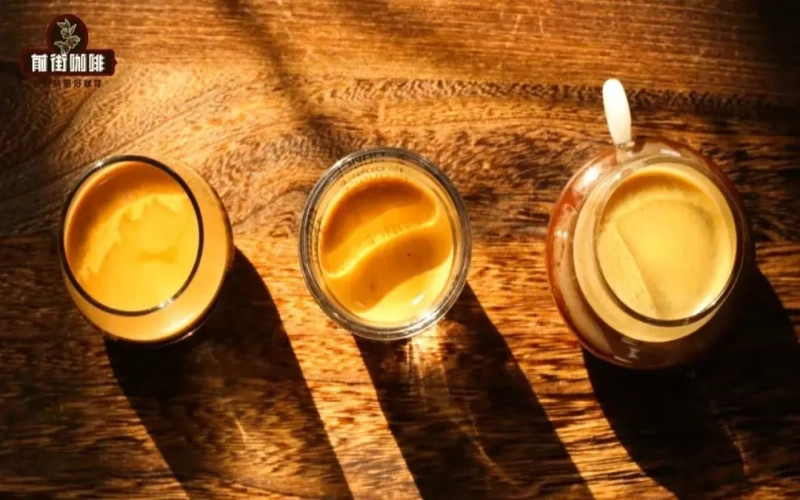
Many coffee enthusiasts have heard of the three terms "original extraction," "fine extraction," and "full extraction," but are not quite clear on what exactly distinguishes them, nor why these options are almost never seen in specialty coffee shops. In fact, they correspond respectively to Normale, Ristretto, and Lungo in espresso—that is, regular espresso, short-extraction espresso, and long-extraction espresso. The core differences among the three center on concentration and flavor expression: different brew ratios lead to changes in the extracted coffee's concentration and extraction yield. This article uses Front Street Espresso Blend · Strawberry Candy Espresso as an example to break down the extraction parameters and flavor characteristics of the three espressos one by one, and explains why specialty coffee shops rarely offer multiple espresso type choices—this involves both the practical difficulty of grind size adjustment and the compatibility of different espressos in milk coffee. [more…]
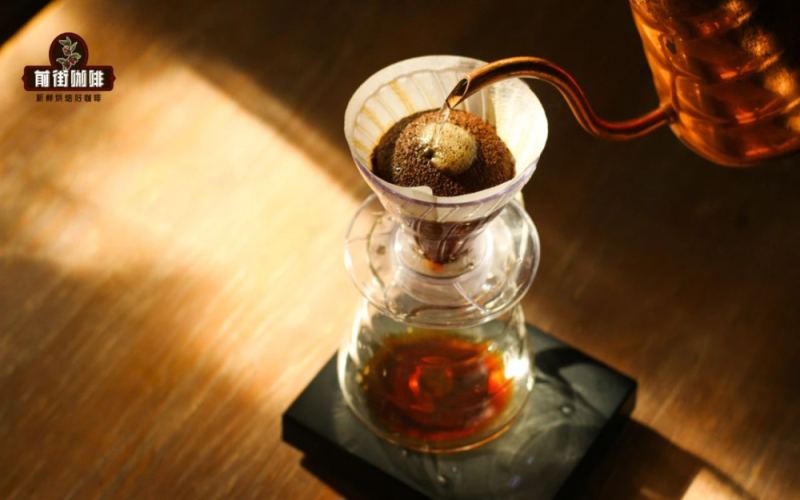
Can You Make a Latte Without an Espresso Machine? A Complete Guide to the Immersion-Style High-Concentration Coffee Extraction Method
Can you make a latte by adding milk to pour-over coffee? Of course you can, but if you simply mix milk with coffee at the strength of a regular pour-over, the result often tastes thin and weak. If you want to enjoy a rich milk coffee without an espresso machine or a moka pot, the key is to first obtain a sufficiently concentrated coffee liquid. In this article, Front Street will share a recently popular "reverse operation" — first soaking and extracting the coffee in a container, then filtering out the grounds with a paper filter, thereby obtaining a high-concentration coffee suitable for making milk coffee. The article will break down in detail the essential difference between this immersion-style extraction and regular pour-over, why making milk coffee requires high concentration, which coffee beans are suitable, and the complete operational steps from coffee-to-water ratio, grind size, stirring rhythm, to milk ratio. [more…]
An In-Depth Analysis of Coffee Extraction: Concentration Measurement, Extraction Yield Conversion, and Calculation Methods for Various Brewing Devices
Coffee extraction is the key step that determines flavor. About 30% of coffee beans consists of soluble substances, including both aromatic components and mouthfeel-related compounds, and a higher extraction yield does not necessarily mean better quality. This article systematically introduces concentration measurement methods (refractometer, conductivity pen, evaporation and drying), explains the extraction yield conversion formula in detail, and provides specific calculation steps for different brewing devices such as immersion, pour-over, and espresso. It also includes the golden cup concentration recommendations from the SCAA and SCAE, as well as relevant product information from the Front Street Coffee brand, to help enthusiasts understand extraction more scientifically. [more…]
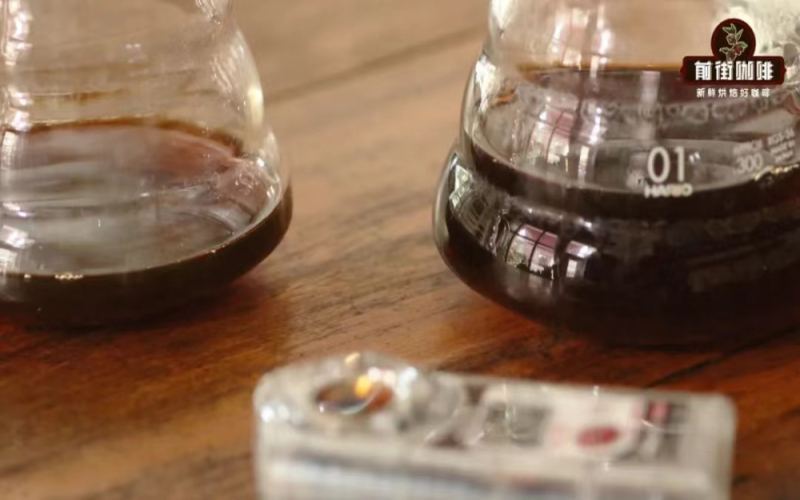
How Is the Extraction Yield of Pour-Over Coffee Calculated? A Complete Guide to the Golden Cup Extraction Theory's Formula and Practical Methods
Should brewing coffee rely on feeling or on data? With the maturation of extraction theory, pour-over coffee has gradually moved from empiricism toward a scientific approach. As a classic reference, the Golden Cup extraction standard, although some of the ranges in its 1.0 version are no longer fully suited to the present, still leaves behind extraction yield and concentration calculation formulas that remain practical today. From Front Street's perspective, this article first reviews the background of the Golden Cup standard and Lockhart's research journey, then focuses on explaining two methods for calculating extraction yield: the traditional dry weighing method, and the method of using a TDS meter to infer extraction yield from concentration. The article also summarizes the definitions of concentration and extraction yield, their interrelationship, and conversion formulas, and reminds that for drip coffee, the water absorbed by the coffee bed requires correcting the weight of the brewed liquid, helping you more accurately evaluate the performance of a cup of pour-over. [more…]
How to determine the coffee-to-water ratio for pour-over coffee? The Golden Cup extraction yield and strength calculation and practical methods to avoid over-extraction
Many coffee enthusiasts have encountered this confusion: for the same beans, why does the taste always differ between what you brew yourself and what a Front Street barista brews? In fact, this involves two core concepts—extraction yield and concentration. This article, based on the daily experience of Front Street Coffee (FrontStreet Coffee), systematically explains what coffee extraction yield is, how to measure extraction yield using a TDS concentration meter, and the conversion relationships in the SCAA Golden Cup standard among 18%–22% extraction yield, 1.15%–1.35% concentration, and a 1:12–1:15 coffee-to-water ratio. The article also reviews the historical origins of the Golden Cup theory and, using Front Street's brewing of Panama Elida Natural Typica as an example, provides complete staged pouring parameters and the extraction yield calculation process, helping you brew a cup of pour-over coffee at home that is not over-extracted and has a pleasing flavor. [more…]
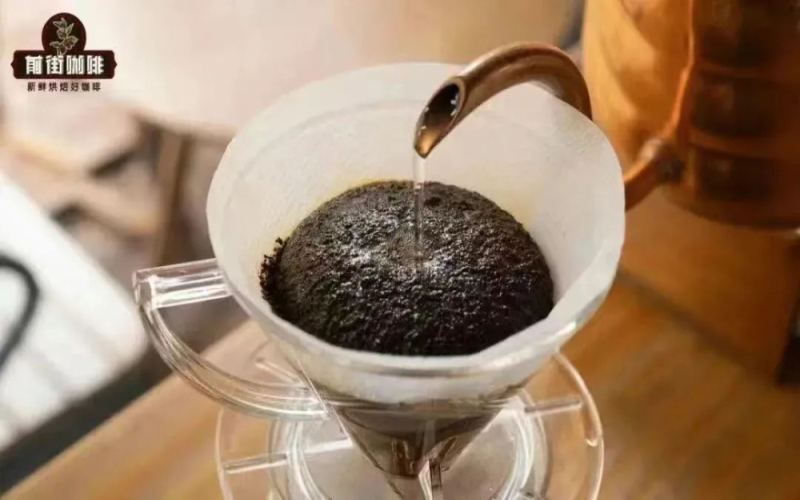
Why Does Japanese Hand-Drip Coffee Favor a Large Dose? Analyzing the Extraction Logic of High Concentration and Low Extraction
Japanese-style pour-over often uses a large dose of 20g or more—what extraction logic lies behind this? Starting from the characteristics of the dark-roasted beans favored by the Japanese, this article explains why they dislike bitterness, why they choose a coarse grind, and how a large dose slows the flow and increases concentration by thickening the coffee bed, ultimately forming a "high concentration, low extraction" style. The article also compares the differences between the Japanese-style coffee-to-liquid ratio and the conventional coffee-to-water ratio, and points out how a long extraction time, combined with a large dose, brings out caramel aroma and a highly sweet, lingering finish. If you are interested in the unique methods of Japanese brewing, or want to understand the concept of high concentration, low extraction discussed by Front Street Coffee, this article will give you clear answers. [more…]

What to Do When Espresso Is Too Weak? A Complete Analysis from Brew Ratio to Extraction Strategy
Many home coffee enthusiasts often encounter the problem of weak flavor and lack of aroma when making espresso. Among the factors that affect whether a cup of espresso tastes good, the flavor and strength of the shot are a key part. Starting from Front Street's extraction experiments, this article analyzes the relationship between strength and extraction yield by tasting the beginning, middle, and end segments of the espresso, answers whether strength can be increased through more extraction, and provides strength improvement plans for coffee beans of different roast levels, helping you find the right brew ratio and extraction strategy. [more…]
A Complete Guide to the Golden Cup Standard for Pour-Over Coffee: The Golden Ranges for Extraction Yield and Strength, Plus Practical References
You often hear the "Golden Cup Standard" mentioned in coffee circles—what exactly does it mean? Simply put, it's an extraction reference range derived by Dr. Lockhart in the last century through extensive sampling surveys—when coffee's extraction yield and concentration fall within a specific range, most people find it tastes good. After subsequent research revisions, the optimal extraction yield was ultimately determined to be 18%~22%, and concentration 1.15%~1.35%. However, Front Street would like to remind everyone that the Golden Cup Standard is only a reference benchmark for beginners, not the sole criterion for whether coffee tastes good. This article will break down in detail the origins of the Golden Cup Standard, the meaning of extraction yield and concentration, and why coffee outside this range isn't necessarily bad—helping you understand the extraction logic of pour-over coffee more flexibly. [more…]